

When Karachi’s Koel Gallery opened its doors to Noorun-ala-Noor, it introduced more than just another art exhibition. This showcase directly engaged with one of Islam’s most profound metaphors: divine light as both illumination and transformation, setting a clear intent for viewers to encounter this theme throughout.
Curated by Alefiya Abbas Ali and organised under the patronage of Dawat-e-Hadiya, Light Upon Light brought together seventeen artists from across the world, each approaching the Qur’anic metaphor of divine illumination through their own visual language. Painting, calligraphy, sacred geometry, textile art, and installations filled nineteen display corners throughout the gallery, creating an experience that moved between the intimate and the monumental.
The exhibition’s spiritual core was the Verse of Light, Ayat al-Nur, drawn from Surah Al-Nur (24:35), a passage that has shaped Muslim artistic imagination for centuries. Additional works took reference from Surah Al-Baqarah (2:257), in which Allah leads believers from darkness into light, and from Surah Al-Ma’idah (5:55), whose symbolic register of radiant illumination recurred across several pieces. These were not merely textual citations. In the hands of the participating artists, they became compositional principles, guiding decisions about colour, form, geometry, and negative space. The result was a body of work that felt simultaneously rooted in classical tradition and entirely alive to the present moment.
Fatimid architectural motifs, illuminated manuscript traditions, and geometric patterning derived from centuries of Islamic decorative practice appeared throughout the exhibition, but never as nostalgic recreation. The artists engaged these visual histories with intelligence and intention, allowing historical form to carry contemporary meaning. The journey from darkness to light, Noorun Ala Noor, was not treated as a resolved destination but as an ongoing passage, one that the viewers experienced physically as they moved through the space.
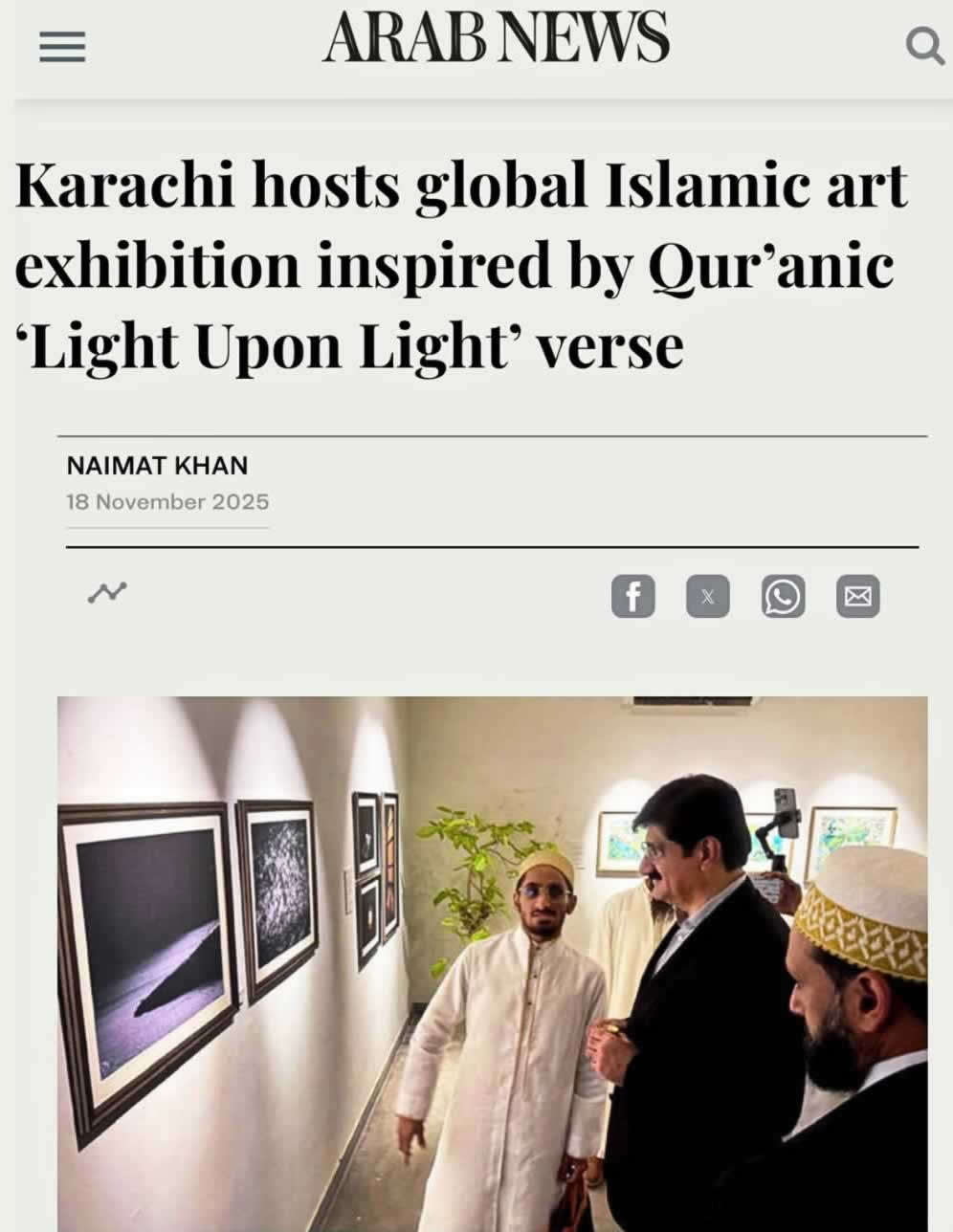
The exhibition marked the first Karachi presentation by RadiantArts, known formally as Anwaar Al-Funun, a women-led, non-profit arts initiative of the Dawoodi Bohra community. Over fourteen previous exhibitions across Africa, Sri Lanka, India, and the United States, RadiantArts has built a quiet but significant reputation for presenting Islamic cultural heritage through serious, thoughtfully produced artistic programming. Sindh Chief Minister Syed Murad Ali Shah, who inaugurated the exhibition, described it as “a remarkable blend of creativity and spirituality,” adding that such initiatives strengthen social harmony and offer younger generations a meaningful connection to their heritage.
That ambition was visible throughout the exhibition, not in grand gestures, but in the accumulation of careful, considered work from artists who understood that spiritual themes demand discipline, not decoration. Light Upon Light did not reach for easy transcendence. It earned it, slowly, through the quality of its vision.
For those who believe art has a responsibility to carry meaning beyond the aesthetic, this exhibition served as a reminder of what that can look like when it is done well.
Sources: